
There’s a quiet frustration building in a lot of workplaces right now, and if you manage people or plan corporate events, you’ve probably felt it even if nobody’s said it out loud.
The numbers are up. Revenue is strong. Leadership is celebrating. And somewhere in the middle of all that, the people who actually showed up every day, hit their targets, covered shifts, and kept things running are sitting there thinking: okay, but what about us?
It’s not that companies don’t care. Most do, genuinely. But there’s a real difference between a company that values its employees on a spreadsheet and one that makes those employees actually feel it. And that gap is wider than most leadership teams realize.

The Problem With Most Appreciation Efforts
Pizza parties. Bonus announcements read aloud in a meeting. A branded mug with the company logo. These things aren’t bad, but they share a common flaw: they’re transactional. They say “we did something for you” without ever making anyone feel like the company actually sees them as a person.
Employees don’t need more stuff. They need a moment where someone in the room thought specifically about them, not about the headcount, not about retention metrics, not about what looked good in the company newsletter. Just them.
That’s a harder thing to manufacture than a gift card, and most standard appreciation events don’t even try.
What They’re Really Saying in the Break Room
And here’s the thing most leadership teams never hear directly: employees are often saying one thing to their manager’s face and something completely different in the break room. Not because they’re dishonest, but because the culture of most workplaces quietly trains people to say “everything’s fine” when someone with authority asks. The real conversation, the one about morale, about feeling like a number, about appreciation that feels more like a treat handed to a child than a genuine acknowledgment of hard work, that conversation happens after hours, in the parking lot, over lunch away from the office. If your team’s appreciation efforts are generating that kind of talk behind closed doors, no amount of announced perks is going to close that gap. What people actually want is to feel like someone in charge genuinely thought about them as human beings, not as a metric that needed to be managed.

What Actually Makes People Feel Seen
Think about the moments from a work event that people actually talk about afterward. It’s almost never the catered lunch or the slideshow recap of quarterly wins. It’s the unexpected thing. The moment that felt spontaneous and human. The thing that broke the usual script of a corporate gathering and reminded everyone in the room that they were, in fact, a room full of real people.
Live, interactive entertainment does something that almost nothing else on a corporate event agenda can do: it responds to the actual people in front of it, in real time. Not a pre-recorded video, not a canned presentation, not a speaker reading from slides. A real human on stage, engaging directly with your team, responding to who they are in that moment.
That’s not a small thing. That’s the whole thing.
Why a Mentalist Works Specifically Well Here
A mentalist is an unusual choice for a lot of planners, right up until they see one work a corporate room. Then it tends to make complete sense.
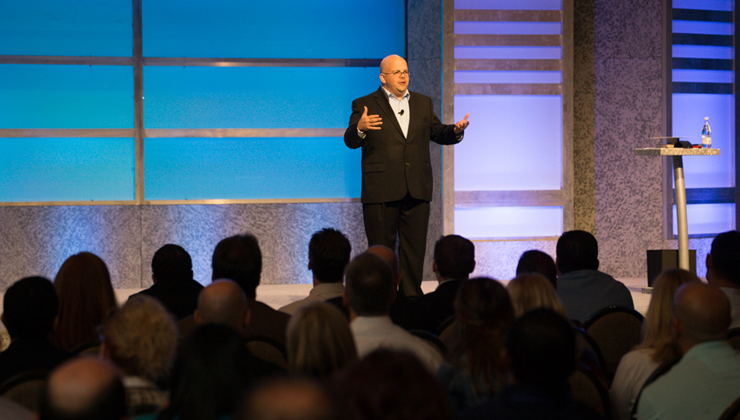
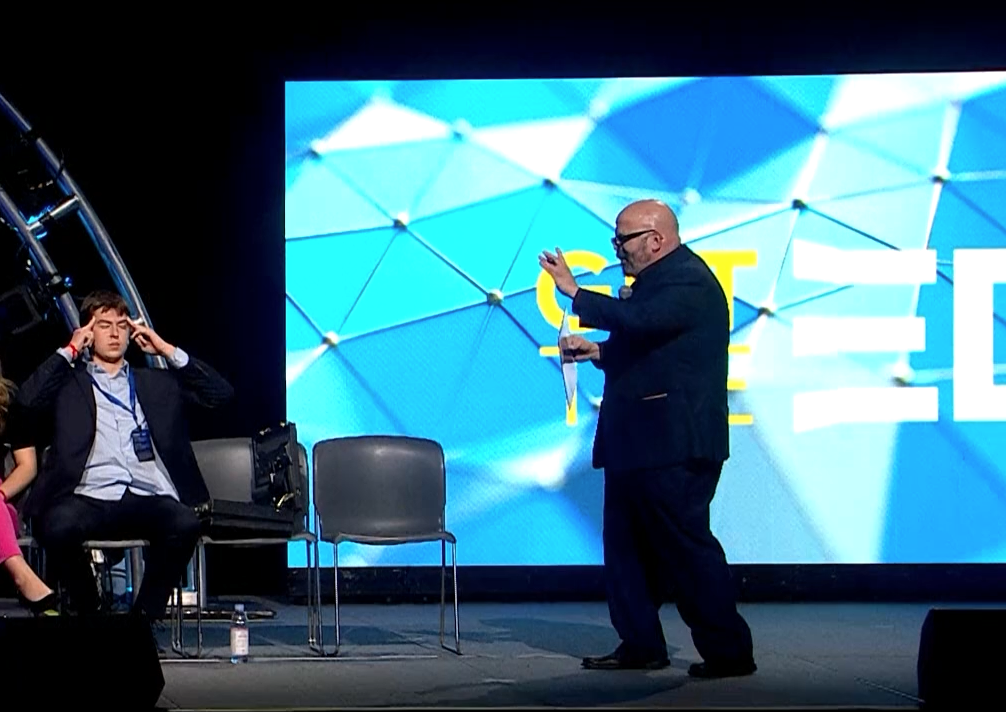
The entire experience is built around people, reading them, responding to them, pulling something real out of the moment. It’s inherently personal in a way that a comedian’s set or a motivational speech usually isn’t. When someone from your team ends up on stage and something genuinely surprising happens involving them specifically, the rest of the room lights up. Not because of a trick, but because someone was paying close enough attention to make that person the center of something memorable.
For an employee appreciation event, that’s exactly the energy you want. It says, without anyone having to announce it: we planned something that was actually about you.
The Real Return on an Appreciation Event
Planners sometimes hesitate on entertainment budgets because the return isn’t as obvious as other line items. But consider what a genuinely memorable appreciation event actually does: people talk about it. They come back to the next one. They feel, even briefly, like the company they work for is worth showing up for. That’s not nothing, especially in an era when disengagement and quiet quitting are real problems with real costs.
The companies that get this right aren’t necessarily spending more. They’re spending more intentionally, on experiences that actually land rather than gestures that get forgotten by Monday morning.
If You’re Planning an Appreciation Event
Start with the question that most planners skip: what do we want our team to feel when they walk out of this? If the answer is anything close to “seen, appreciated, like the company actually thought about them,” then what’s on the agenda needs to match that answer.
John Pullum has spent over thirty years performing for corporate audiences across the country, from sales conferences and conventions to executive dinners and company-wide celebrations. His shows are clean, interactive, and built specifically for business audiences, the kind of experience your team will still be talking about at the next one.
If you’re planning an employee appreciation event and want something that actually means something, reach out by CLICKING HERE. The conversation is free, and there’s no pressure, just a straight talk about what would work best for your group.