Your conference day starts strong. Eight AM keynote, energy in the room, people are awake and paying attention. By lunch, folks are reasonably engaged. By three PM, you can feel the fatigue setting in. And by six or seven PM when your closing entertainment is supposed to hit? Your audience is tired. Really tired. They’ve sat through eight or nine hours of content, presentations, breakouts, and networking. The last thing many of them want to do is sit through more programming—even if it’s supposed to be fun.
This is the reality that most conference planners don’t account for. And it’s why so many evening entertainment acts bomb, not because the entertainment is bad, but because the audience isn’t ready to receive it.

The Energy Management Problem
Here’s what happens at most conferences: the schedule is packed. Back-to-back sessions, minimal breaks, lunch that’s designed to also be a networking opportunity (so no real downtime). By the time evening entertainment rolls around, your attendees are running on fumes. Their brains are exhausted from information intake. Their bodies are tired from sitting. They want rest, not more stimulation.
Even a world-class entertainer can’t overcome that. You can bring in a top-tier performer and they’ll still be fighting an uphill battle because the audience’s capacity to engage has hit a wall.
What Actually Works: Strategic Breaks and Energy Restoration
The conferences that nail evening entertainment do something different: they protect and restore their attendees’ energy throughout the day.
That might sound simple, but it requires real intentionality. It means building in actual breaks—not “networking breaks” where people are expected to work, but genuine downtime. Fifteen to twenty minutes where people can step outside, breathe, sit quietly, or grab a coffee without any expectation of engagement.
It means not filling every minute with programming. Your schedule should have gaps. White space. Moments where nothing is officially happening.
It means watching the pacing of content. If you’ve had three intense sessions in a row, the fourth session should be lighter or shorter. A panel discussion might be intellectually engaging but physically passive—that’s different from a hands-on workshop.
It means considering what your lunch break actually is. If it’s just “eat while networking,” people don’t actually rest. Consider building in thirty minutes of genuine lunch—where eating is the only expectation—before networking begins.

The Afternoon Reset
One of the simplest and most effective tools is a well-placed afternoon break or activity that genuinely resets people. This might be a fifteen-minute physical activity—nothing intense, just movement. A stretch break. A walk outside. Something that gets blood flowing and clears heads.
Or it might be entertainment placed strategically mid-afternoon, not as a “break” but as an actual energy boost. An interactive entertainer—someone who engages the audience, makes them laugh, gets them moving—can actually restore energy rather than further deplete it. That’s different from evening entertainment. You’re not closing the day; you’re refreshing people so they can handle the final sessions.
Some conferences even build in a true rest period: a scheduled “quiet hour” in the afternoon where attendees are encouraged to go back to their hotel rooms, nap if they want, or just step away. It sounds counterintuitive—you’re paying for these people to attend, why would you encourage them to leave?—but it actually increases engagement in everything that follows.
Why Evening Entertainment Fails (And How to Fix It)
The mistake is assuming evening entertainment needs to be the grand finale of the day. It doesn’t. Your evening program can be:
The energizer kickoff. If you start your evening program earlier—five PM instead of eight PM—people still have some capacity. An interactive entertainment act at five PM that gets people laughing and engaged can actually set the tone for the rest of the evening: dinner, networking, more relaxed socializing.
The breather. Entertainment placed right after a heavy content session, while people are still seated but need mental relief, serves a different function. It’s not supposed to be the highlight; it’s supposed to give brains a rest.
The authentic closer. If you want a true closing act, make sure the day before it is genuinely structured to preserve energy. Fewer sessions that afternoon, a real break, maybe even dismissal at three or four PM so people have time to rest and freshen up before evening festivities.
The Performer Matters
Here’s where your choice of entertainer becomes crucial. If you’re booking evening entertainment at seven or eight PM, you need an entertainer who knows how to work a tired crowd. Someone who understands that you’re not performing for fresh, alert minds—you’re performing for people running on fumes who need to be invited back into engagement.
That takes a specific skill set. It means reading the room and adjusting. It means interactive entertainment where the audience’s participation is what drives the energy—they’re not passive observers, they’re part of the experience. It means someone who can make people laugh, surprise them, and remind them why they came to this conference in the first place.
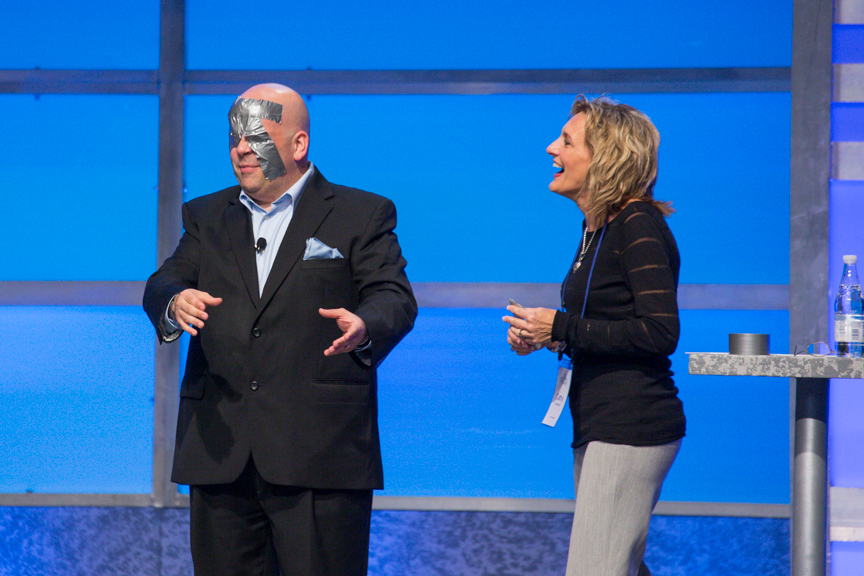
A mentalist act that involves the audience directly, that calls people up and makes them the center of attention, that creates moments of genuine surprise—that works for a tired crowd because it pulls them into the experience rather than asking them to passively watch something.
A comedian who just delivers a monologue? That’s harder for a tired audience. They have to sit and receive. A comedy mentalist who involves people directly, who makes audience members the stars? That’s a different animal.
Building Your Full Day Strategy
Here’s what a well-designed conference day looks like:
Eight AM to ten AM: Opening keynote (energy high, people fresh). Forty-five minutes.
Ten AM to ten-thirty AM: Break (real break, movement encouraged).
Ten-thirty AM to noon: Breakout sessions.
Noon to one PM: Lunch (eating is the primary activity).
One PM to two-thirty PM: Content sessions.
Two-thirty PM to three PM: Break (movement, fresh air).
Three PM to four-thirty PM: Lighter content or hands-on workshop.
Four-thirty PM to five PM: Transition time (people freshen up, move around).
Five PM to six PM: Evening entertainment (interactive, engaging, while people still have capacity).
Six PM to seven-thirty PM: Dinner and networking (more relaxed, people have already been engaged and entertained).
Seven-thirty PM onward: Optional evening activities (people choose to participate rather than having energy demanded from them).
That’s a structure that preserves energy, strategically uses breaks, and places entertainment where it can actually land.

The Real ROI
When you structure your conference to preserve attendee energy, and you pair that with entertainment that actually engages people, something shifts. People don’t leave thinking “I survived the conference.” They leave thinking “That was actually worth my time.”
They remember the experience. They talk about it. They’re more likely to attend next year. And the entertainment you booked—the interactive, engaging kind—becomes the thing they remember most fondly, not because it was flashy, but because it was a genuine moment of connection and energy in their day.
If you’re planning your next conference and you want to nail the entertainment piece, the first step isn’t choosing a performer. It’s structuring your day so that when the performer takes the stage, your audience has the capacity to actually engage. Everything else flows from there.
Let’s talk about how to structure your event for maximum impact and what kind of entertainment will actually land with your tired-but-willing audience. Reach out, and we can build a day that people remember.